

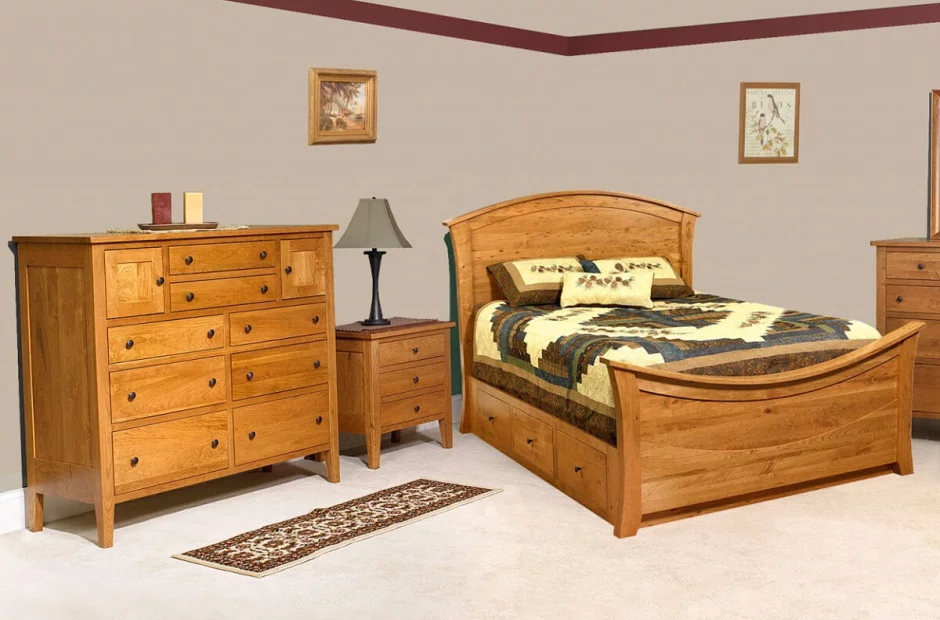
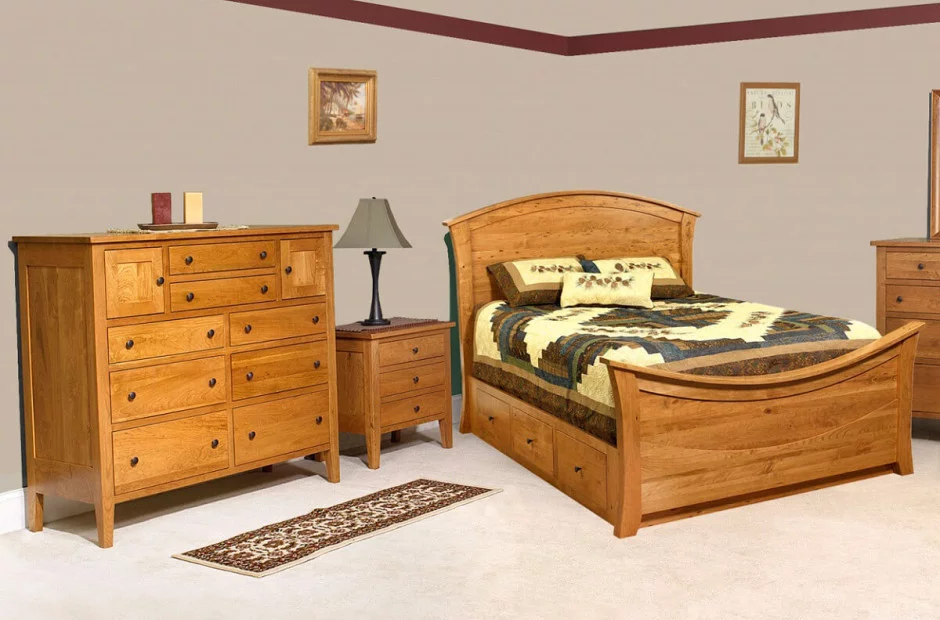
If you've been shopping for solid wood furniture, you've probably come across both terms: Amish furniture and Shaker furniture. They're often mentioned in the same breath, and for good reason. Both are associated with quality construction and honest, purposeful design.
But they're not the same thing, and the distinction matters when you're trying to make a smart buying decision.
What Is Amish Furniture?
Amish furniture refers to who builds it. It is made by Amish craftsmen, most of whom live and work in tight-knit communities across Ohio, Indiana, Pennsylvania, and nearby Midwest states. These shops tend to be small and family-operated, passing skills from one generation to the next.
The Amish tradition places deep value on skilled handwork, purposeful living, and doing things the right way rather than the fast way. That culture directly shapes how Amish woodworkers approach their craft. There are no assembly lines, no shortcuts, and no pressure to hit mass-production numbers. Each piece is built by a person who takes their work seriously.
Key characteristics of Amish-built furniture:
-
Constructed from solid North American hardwoods such as oak, cherry, brown maple, and walnut, with no particleboard or hollow-core panels
-
Uses traditional joinery, including mortise and tenon frames and dovetailed drawers
-
Built to order, meaning each piece is started after a customer places an order, not pulled from a warehouse shelf
-
Available in a wide range of styles, from plain and simple to more ornate traditional designs
That last point is important: Amish furniture is defined by its maker and its construction, not by a single look. An Amish woodworker can build a piece in many different styles, including Mission, traditional, contemporary, and Shaker.
What Is Shaker Furniture?
Shaker furniture refers to a style, not a builder. It originated with the Shakers, a religious community that established settlements in New England, Kentucky, Ohio, and other parts of the US beginning in the late 1700s. At their peak in the mid-1800s, Shaker communities were known across the country for the quality of the goods they produced and sold, furniture chief among them.
The Shakers believed that beauty was inseparable from function. Decoration for its own sake was considered wasteful and even spiritually suspect. Their furniture reflected that belief: no carving, no inlay, no ornament unless it served a clear purpose. What remained was a style defined by proportion, precision, and the natural quality of the wood itself.
Shaker style never really went out of favor after the communities declined. Its clean geometry and understated character have made it adaptable across many different home styles and eras, from 19th-century farmhouses to modern interiors.
Key characteristics of Shaker style:
-
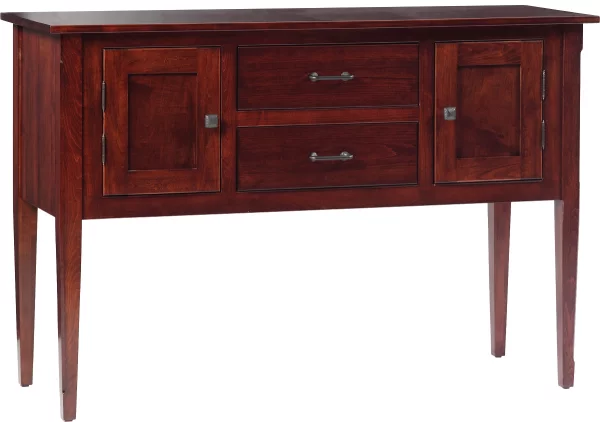
Clean, straight lines with minimal ornamentation
-
Tapered legs, typically square in section
-
Flat, recessed panel doors set inside a simple frame
-
Flat drawer fronts without raised profiles
-
Simple, modest hardware
-
Emphasis on balance and proportion
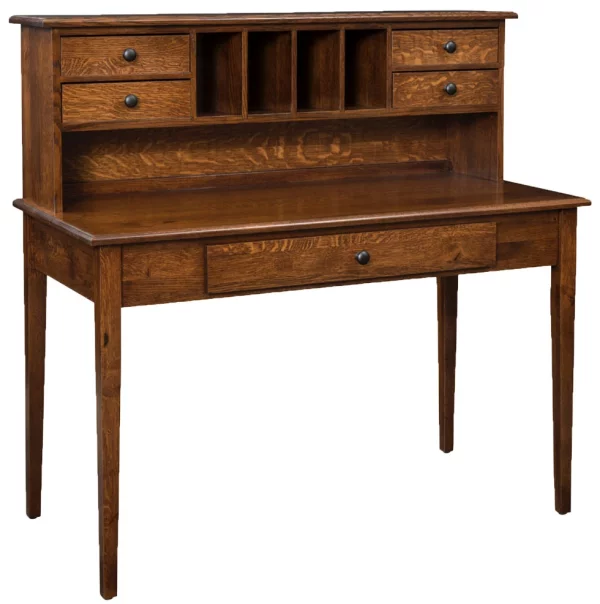
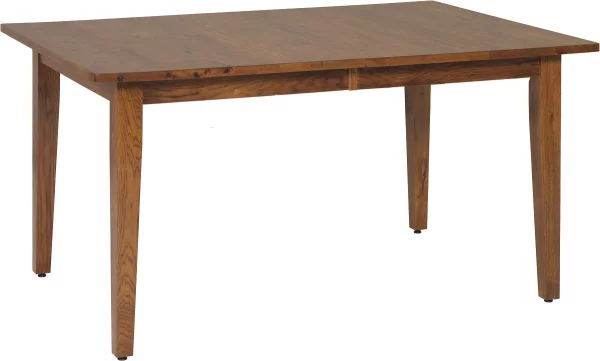
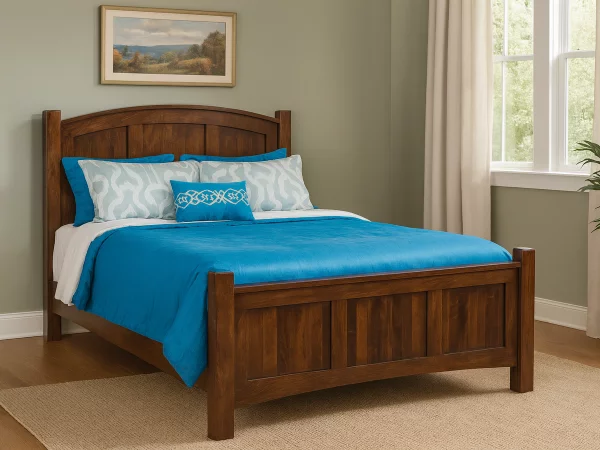
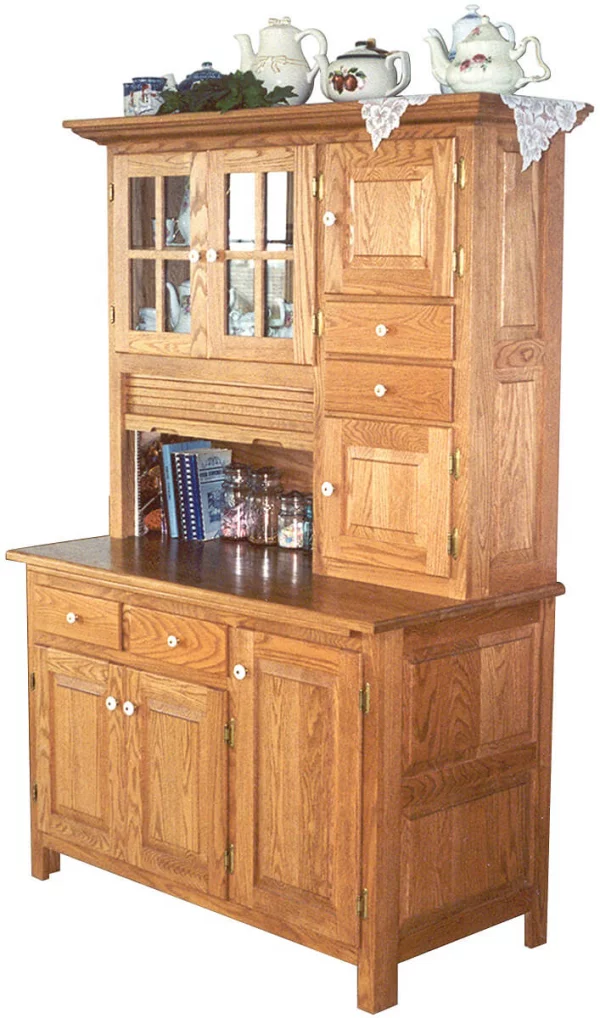
Shaker style is defined by its look and design principles, not by who builds it or what materials are used. That distinction matters because the market is full of Shaker-style furniture built from low-quality materials. Shop for Shaker furniture, including beds, chairs, tables, hutches, desks, and more.
Featured
Shaker furniture offered from Countryside Amish Furniture

How Amish and Shaker Furniture Overlap
This is where the two traditions come together. Amish craftsmen have been building Shaker-style furniture for generations, and it's an intuitive pairing.
The Shakers and the Amish share certain values despite coming from different religious traditions. Both communities have historically emphasized skilled craft, honest materials, and utility over excess. Shaker design principles map naturally onto the way Amish woodworkers already approach their work: solid wood, traditional joinery, and nothing in the construction that doesn't earn its place.
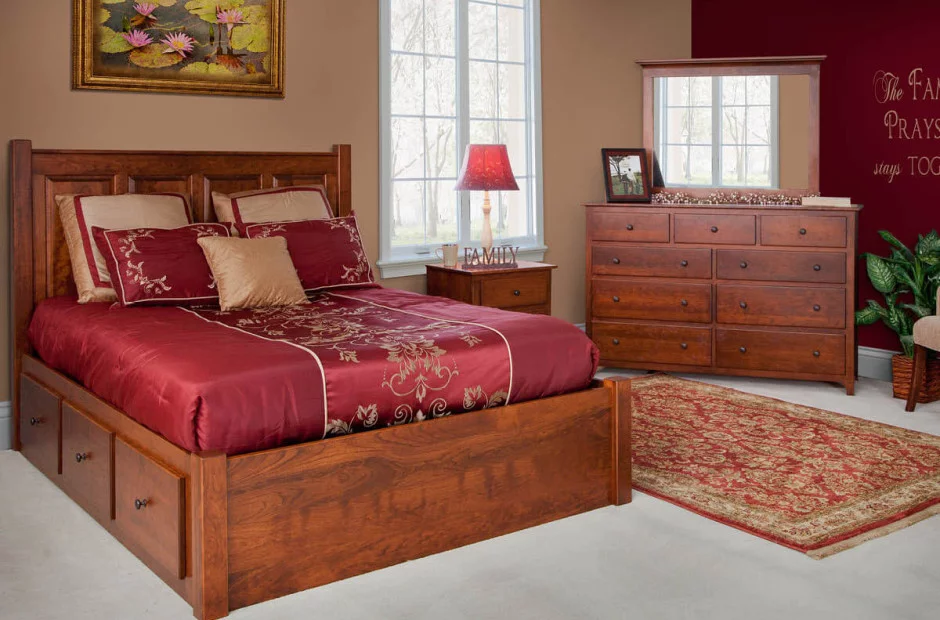
When an Amish woodworker builds a Shaker-style piece, you get the design restraint and clean lines of the Shaker aesthetic alongside the solid hardwood construction, mortise and tenon frames, dovetailed drawers, and hand-applied finish of Amish craftsmanship.
How Amish and Shaker Furniture Differ
The clearest way to state the difference: Amish is a description of the maker and the construction tradition. Shaker is a description of the visual style and design philosophy.
| Amish Furniture | Shaker Furniture | |
|---|---|---|
| What it describes | The maker and construction tradition | The visual style and design philosophy |
| Origin | Amish communities in the US Midwest | 18th and 19th-century Shaker religious communities |
| Style range | Wide, including Shaker, Mission, traditional, and more | Specific: clean lines, flat panels, minimal ornament |
| Who builds it | Amish craftsmen | Anyone, including Amish craftsmen |
| Materials | Solid North American hardwood | Traditionally solid wood, but varies widely by maker |
| Joinery | Mortise and tenon, dovetail, tongue and groove | Mortise and tenon and dovetail in quality examples |
| Quality standard | Tied to maker tradition and materials | Not a quality standard on its own |
A useful way to think about it: Shaker tells you what a piece looks like. Amish-built tells you how it was made and by whom. The best pieces can be both.
A Closer Look at Shaker Design
If you're drawn to Shaker style, it's worth understanding the specific design choices that define it and why they hold up over time.
Lines and Form
Shaker pieces are built around straight lines and simple geometry. There are no carved surfaces, no decorative turnings, and no applied moldings. The visual interest comes from the quality of the wood grain, the accuracy of the proportions, and the smoothness of the finish. This restraint means a Shaker piece tends to read quietly in a room rather than competing with other furnishings, which is part of why the style adapts well to different interior aesthetics.
Legs
Shaker legs are typically tapered from the seat rail or apron down toward the floor. The taper is subtle but gives the piece a sense of lightness that a straight, uniform leg wouldn't provide. On chairs and tables, legs are often square in section rather than turned or rounded, reinforcing the geometric character of the style.
Doors and Drawers
Cabinet doors in Shaker style use a flat center panel set inside a simple four-piece frame. The panel sits flush or slightly recessed within the frame, and the frame corners meet cleanly without decorative flourishes. This construction is sometimes called a five-piece door, referring to the four frame pieces plus the center panel. Drawer fronts are flat and flush, without raised profiles, routed edges, or overlay detail.
Hardware
Traditional Shaker hardware was small and utilitarian: a turned wooden knob, a simple ceramic pull, or a modest metal ring. Contemporary Shaker pieces often use bar pulls or cup pulls, which suit the clean horizontal and vertical lines of the style. The hardware choice makes a significant difference in how formal or casual the finished piece feels.
Wood
Shaker furniture was historically built in cherry, maple, and walnut, all species native to the northeastern and midwestern US where Shaker communities were concentrated. All three remain popular choices for Shaker-style work today.
Cherry offers a smooth texture and warm tone that deepens noticeably over the first few years. Brown maple has a fine, even grain that accepts stain predictably and holds up well under daily use. Walnut brings a naturally rich, darker color that suits the simplicity of Shaker design without needing a heavy stain.
A Closer Look at Amish Construction
Regardless of style, Amish-built furniture shares certain construction methods that set it apart from mass-produced pieces. These aren't marketing claims; they're specific choices with practical consequences for how furniture performs over time.
Solid Wood Throughout
Amish builders use solid hardwood for frames, panels, drawers, and shelves. There are no particleboard cores, no MDF fillers, and no paper-thin veneers over engineered substrates. Working with solid wood throughout means a piece can be refinished if the surface gets scratched or worn, repaired if a joint loosens, and expected to hold its structure across decades of regular use. Engineered wood products can't make those promises.
Mortise and Tenon Joinery
Frame construction relies on mortise and tenon joinery. A rectangular tenon is cut at the end of one member and fits tightly into a matching mortise cut into the face of another. When the joint is drawn together with glue, the mechanical connection is strong enough to resist the racking and twisting forces that furniture frames experience through normal use. This is not the same as a butt joint held with screws or a doweled connection, both of which are common in factory furniture and are less resistant to stress over time.
Dovetail Drawers
Drawers in quality Amish-built furniture are joined at the corners with dovetails. The interlocking, angled teeth resist the pulling force that acts on a drawer every time it's opened under load. A well-cut dovetail joint is also a sign that the joinery throughout the piece has been taken seriously, because it requires skill and precision to cut correctly. Some drawers use hand-cut dovetails; others are machine-cut. Both are strong. The distinction matters more to woodworkers than to most furniture buyers.
Drawer Hardware
Many Amish-built pieces use full-extension, soft-close drawer slides. Full extension means the drawer can be pulled completely open, giving you access to the full depth of the drawer box. Soft-close means the drawer decelerates and closes quietly on its own in the last few inches, rather than slamming shut. These are practical features that improve everyday use, particularly in kitchens, bathrooms, and home offices.
Finish
Most Amish-built furniture for indoor use is finished with a catalyzed conversion varnish. This is a two-part finish that cures to a hard, protective surface through a chemical reaction rather than simply drying.
The result is significantly more resistant to moisture, household chemicals, and abrasion than oil, wax, or standard polyurethane finishes. It's applied in multiple coats with sanding between applications, and the finished surface is smooth and consistent.
Ordering Shaker Furniture from Countryside Amish Furniture
Countryside Amish Furniture carries a full range of Shaker-style pieces built by Amish craftsmen in the United States. Every piece is made to order in solid North American hardwood, with mortise and tenon frames, dovetailed drawers, and a catalyzed conversion varnish finish.
Featured
Shaker furniture offered from Countryside Amish Furniture
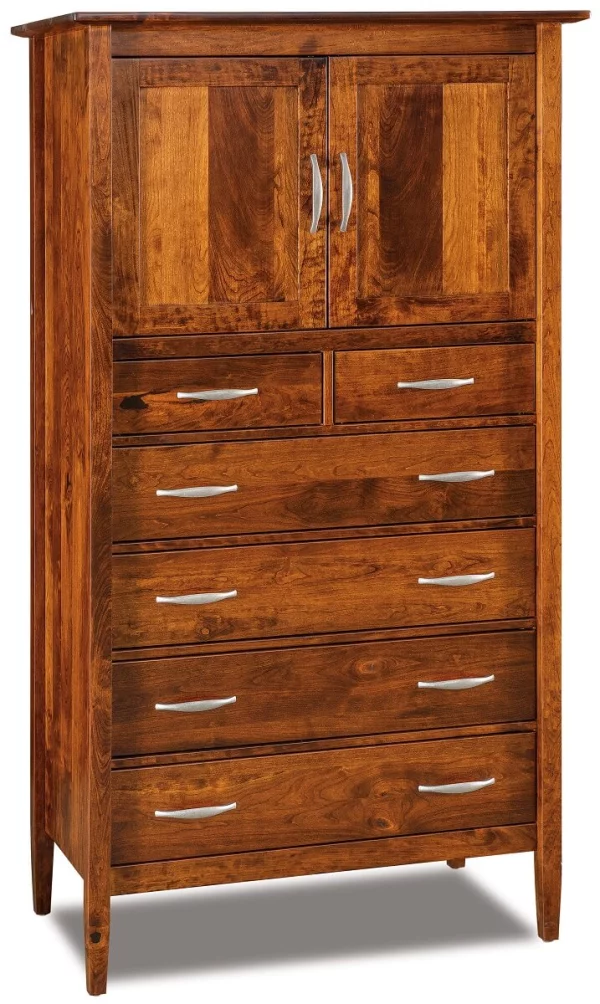
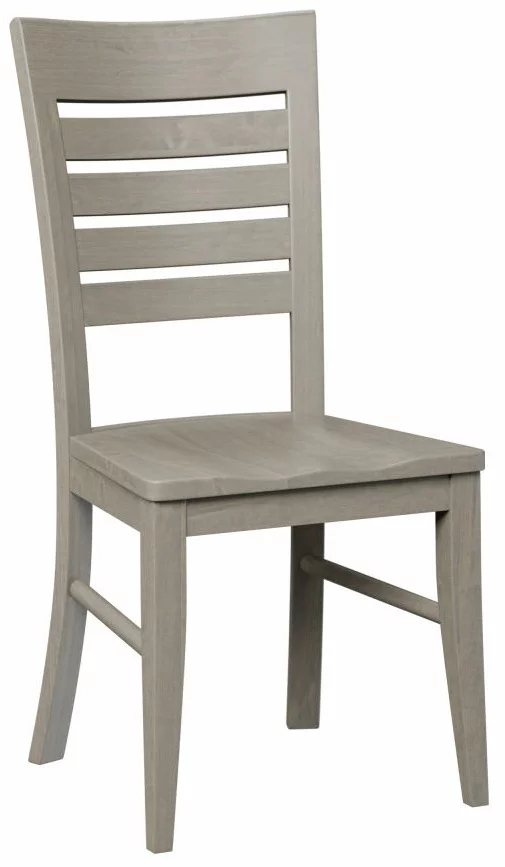
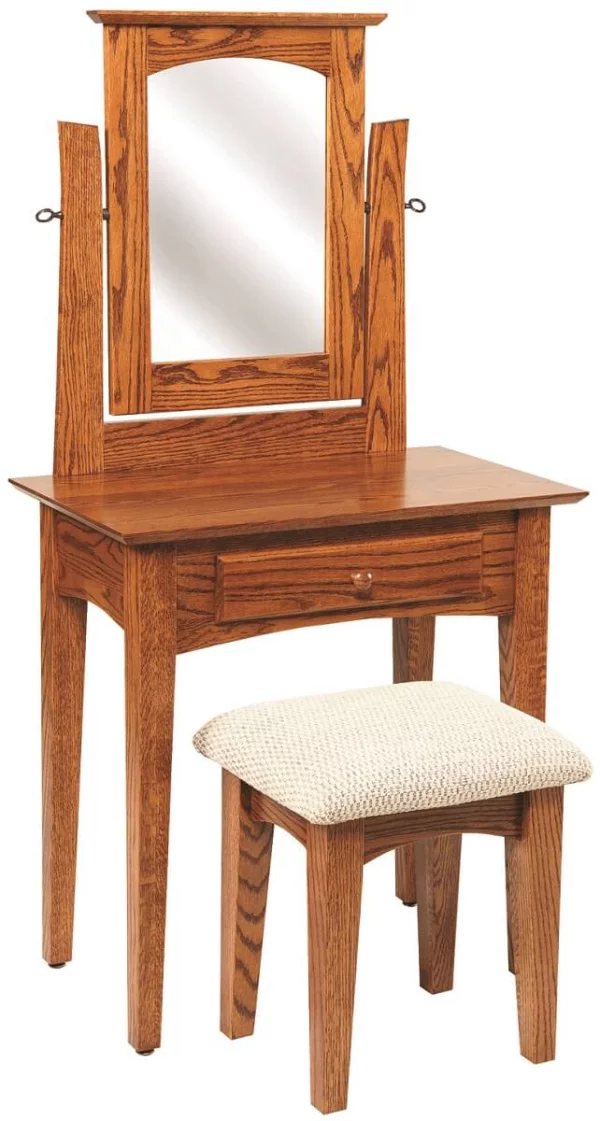
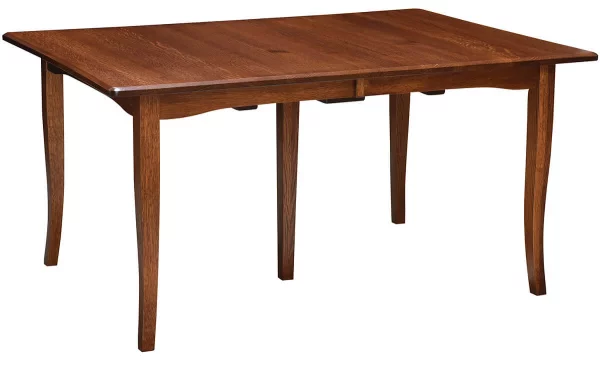
You choose the details: wood species, stain, size, hardware, and any additional features. If you have questions about what will work best for your space, our team can help you work through the options. We can also mail wood stain and upholstery samples so you can review colors in your home's lighting before you commit.
After your order is placed, we confirm all specifications with you before the piece goes to the shop. Build and delivery typically runs 14 to 18 weeks. Delivery is a flat $150 for inside placement and setup anywhere in the contiguous United States.