

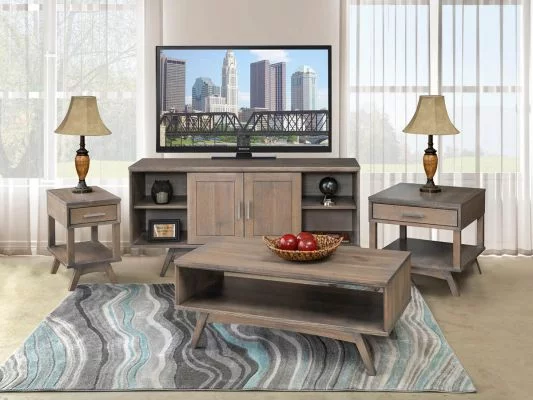

A newly purchased television can be an exciting event, but it naturally leads to the conundrum of finding the right-sized TV stand to match. There are many factors to consider, from the dimensions of the equipment to the height of your seating and the general needs of the room. Countryside Amish Furniture put together the following guide to help you shop for TV stands of the ideal height for your unique circumstances.
Step One - Determining the Preferred Furniture Type For Your TV
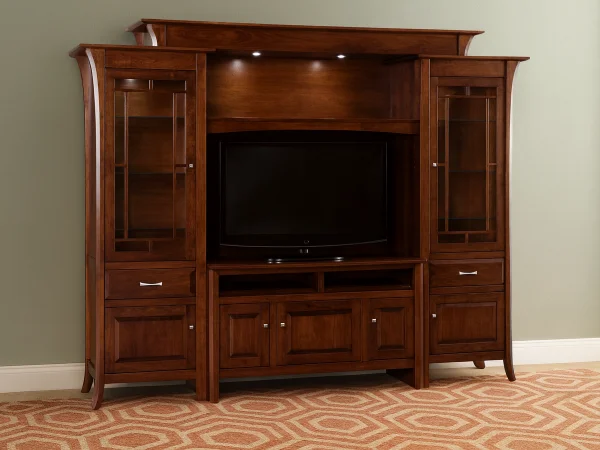
TV consoles are not your only option and, if you have a larger television, it might be the wrong option. Generally speaking, TV stands can accommodate screens up to 70”. However, for anything larger, we suggest a full media center with its added stabilization and general grandeur. Not only do wall-less TV stands leave the equipment exposed to the occasional bump, but they look dwarfed and disproportionately small when a large screen teeters on top. To explore this topic in greater detail, read TV Stand or Cabinet – Understanding Different Designs & Types.
Featured
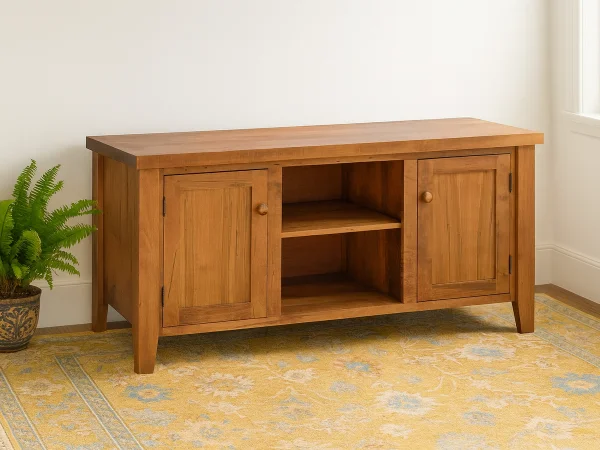
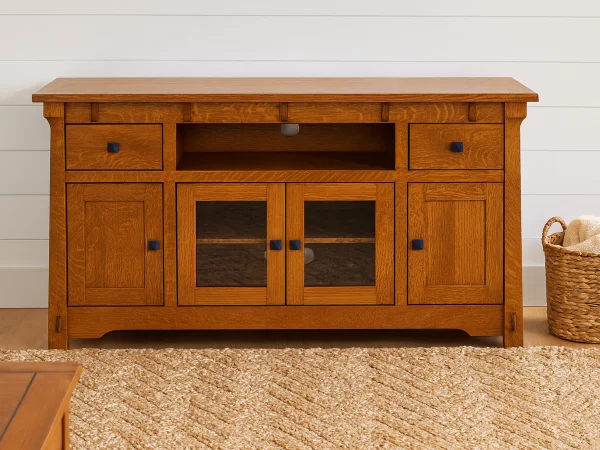
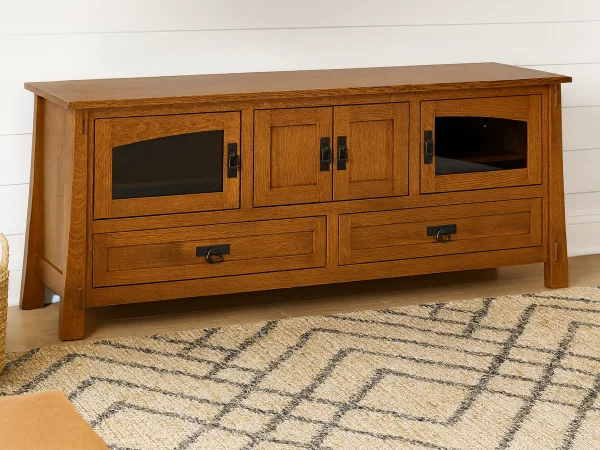
Solid Wood TV Stands
Step Two - Find the Dimensions of your TV’s Footprint
The dimensions promoted on televisions refer to the size of the screens (measured from diagonal corners) rather than how much surface space they will require.
Therefore, it’s important to find or measure the full body of the set prior to purchasing an accompanying stand. If you already own the television, great! Simply measure the length and depth. If you have yet to order the television, you may need to do online research or call the manufacturer. Most TV retailers will offer such sizing information online, though it may be harder to find.

Step Three - Determining the Right Margins
If your television is 10” deep, you obviously don’t want a TV stand that is 10” deep as well. You will want to center the television set on top of a console that allows ample margins for both aesthetic and safety reasons.
Let’s take a commonly sized TV with a 55” screen; it typically measures 48” - 49” inches wide, suggesting that you would want a console of at least 58” of width like Collete TV Cabinet, though you may be able to get away with less.
However, an exception to this rule is if elect for a comprehensive media center; in this scenario, the side margins between the TV and vertical shelving will be much smaller.
Step Four - Determining the Right Height For Your TV Stand
So now that you’ve figured out the right size for the TV stand, you must determine your preferred height. Ideally, the center of the screen would be tall enough to be at eye level for you and most family members.
Sit on the furniture, stare straight ahead, and have someone else place a piece of painter’s tape where your gaze most naturally falls. Then measure the distance from the floor to that point, and then subtract half of the TV’s height. For example, if your line of sight sits comfortably 42” from the floor and you just purchased a 32” tall television, you would calculate 40” minus 16” to get the preferred height of the TV stand, 24”.
Additional Considerations When Choosing a TV Stand’s Sizing and Style
Your television set’s dimensions aren’t the only factor that should play into your ideal TV stand size and height. Other considerations include:
-
The general size of the room - Just like a giant TV can overpower a lighter console, a giant entertainment unit can engulf a smaller room. Even the shape of the unit can influence its relationship with the rest of the layout. TV stands designed for corners will use parts of the room that would otherwise be underutilized, as well as consume overall less floor space.
-
Storage and display needs - Sometimes, a TV stand is just a TV stand, and other times, it lends itself to storing video game equipment, media collections, and various odds-and-ends. Think about whether a comprehensive media center could actually lessen the number of pieces you need, or whether its added shelving would be wasted. If the former, factor in what you would want to store and display in the unit when choosing the preferred design and size. Your choice in supplementary decorations will play a role in choosing the ideal TV stand size, even if you don’t have a larger television. For instance, if you want to surround your equipment with live plants or picture frames, the console should have extra width to support the additions without having them block the screen.
-
Optimal viewing angles and neck comfort - Beyond matching the TV's center to your eye level, consider the vertical viewing angle. The ideal height should have your screen sit at or slightly below eye level, creating a downward viewing angle of 0-15 degrees. This prevents neck strain during extended viewing sessions. If you frequently recline while watching TV, you may want a slightly taller stand to compensate for your shifted sightline.
-
Recliner-friendly height adjustments - If you or your family members frequently watch TV from a recliner in the fully reclined position, you'll need to account for the shifted eye level this creates. When reclined, your sightline naturally elevates by several inches compared to standard upright seating. Consider choosing a TV stand that's 2-4 inches taller than what you'd select for a traditional sofa to maintain that comfortable 0-15 degree downward viewing angle. Test your preferred reclining position before purchasing to ensure the TV center aligns with your relaxed sightline.
-
In which of the room of the house you'll have your TV - Most people associate televisions and their stands with the living room or family room, but these aren't your only options. One common place to have your television is right in front of your bed. For related tips, read Choosing a TV Stand for the Bedroom.
-
Whether you want to hide the TV at times - traditional consoles and stands don’t come with doors designed to conceal the television. Therefore, if this is a goal, you may require a larger entertainment unit.

Tips for Arranging Your TV-Watching Area
Once you’ve chosen your television and paired it with a properly sized TV stand, the final step is arranging the space so it truly works for everyday viewing, long movie nights, and everything in between. The details below help fine-tune comfort, sightlines, sound, and those small practical touches that make a big difference.
- Set the right viewing distance and manage light sources. A good rule of thumb is to place seating about twice the distance of the TV’s screen size, measured diagonally from corner to corner, which helps reduce eye strain and keeps images feeling immersive rather than overwhelming. Equally important is paying attention to natural light; avoid placing the television where sunlight will hit the screen directly, as glare can wash out the picture and make viewing frustrating during daytime hours.
- Orient the TV toward the primary seating area and protect sightlines. Most rooms benefit from having the television face the majority of the seating, even if the space isn’t perfectly symmetrical. Try to keep common walkways from cutting between the couch and the TV, since frequent foot traffic can quickly become distracting.
- Plan for sound equipment alongside the screen. Audio is just as important as visuals when creating a satisfying TV setup, so don’t treat speakers as an afterthought. Soundbars usually rest directly in front of the TV on the stand or mount just below the screen, which means the stand needs enough depth to hold them securely without hanging over the edge or blocking the TV’s infrared sensor. If you’re using a center channel speaker, make sure there’s adequate vertical space between the top of the stand and the bottom of the TV; about two to three inches of clearance helps sound travel cleanly.
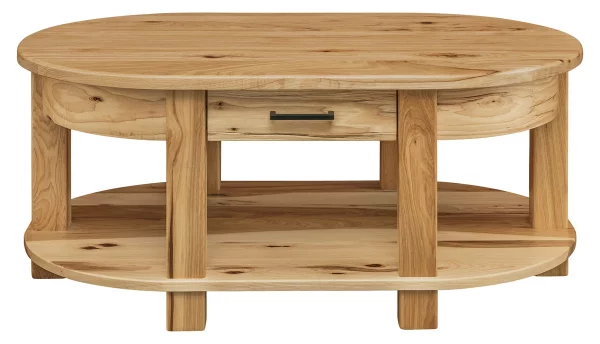
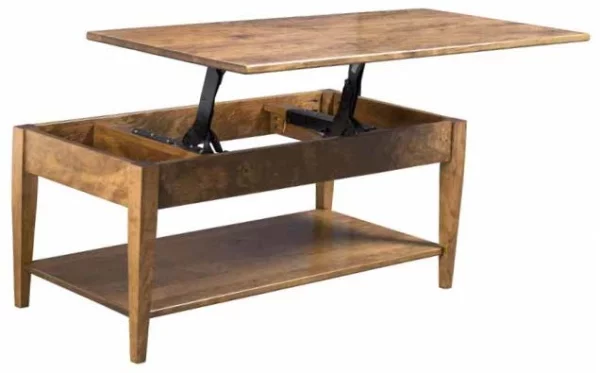
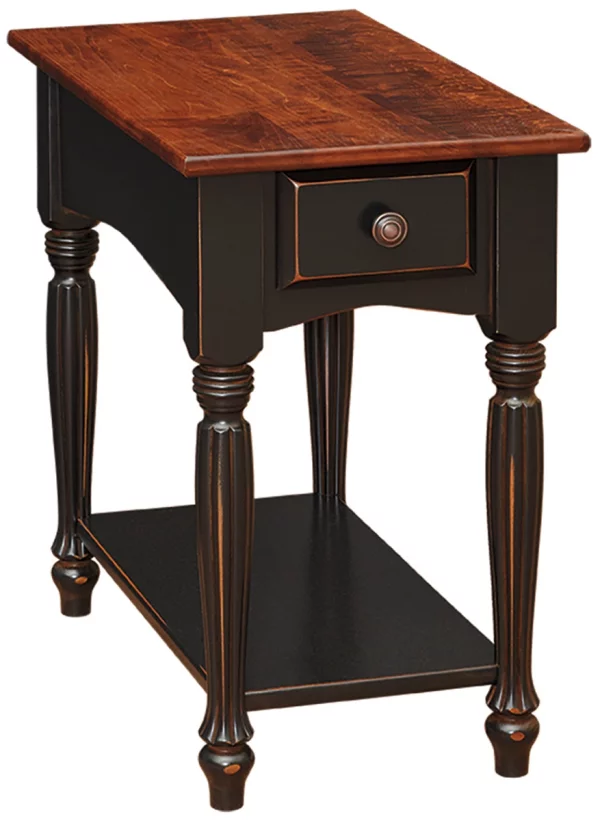
- Decide where remotes and accessories will live. A well-arranged TV area also accounts for the remote controller and other small odds-and-ends. Amish-made coffee tables and end tables with lower shelves or drawers can keep essentials within arm’s reach.
Featured
Coffee Tables and Side Tables With Storage



Buy Your Right-Sized TV Stand From Countryside Amish Furniture
Determined that you want a shorter Arts & Crafts TV stand for your 55” screen, complete with glass cabinets and pull-out drawers? Perhaps a full, traditionally-styled entertainment center with tall, open shelving to frame your television with books and knickknacks? You want it, we’ve got it.
Countryside Amish Furniture has hundreds of different TV stands of varying heights, sizes, and styles, enabling you to find the perfect fit for your home. Better yet, you can customize the choice of wood and stain, as well as decorative touches like handles and knobs. Peruse our online inventory and use the chat function to ask any questions about TV stand sizing that you may have.
Featured
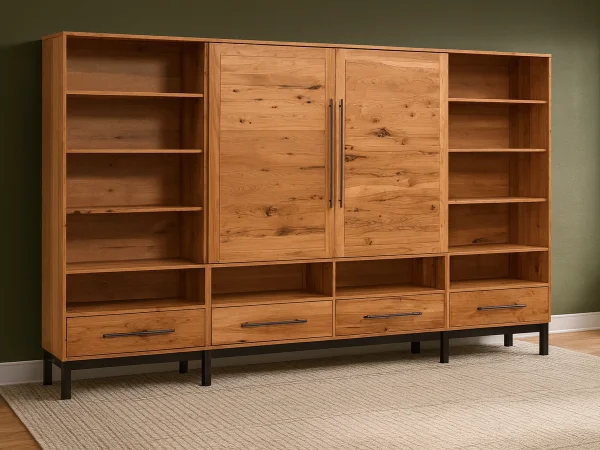
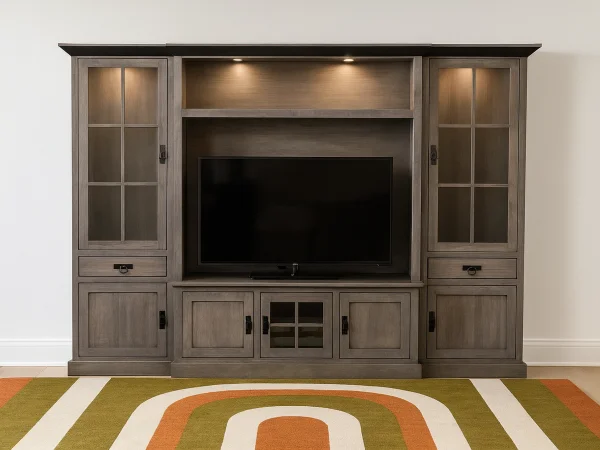
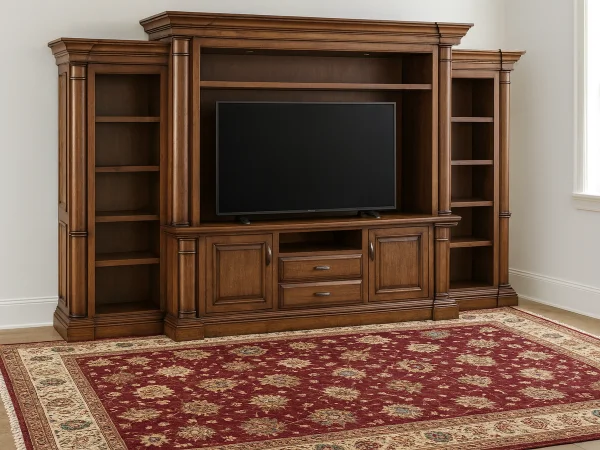
Entertainment Centers You'll Adore
FAQ About TV-Stand Heights and Dimensions
What is the average TV stand height?
The average TV stand height will vary from one furniture designer to the next. However, for Countryside Amish Furniture, the average console height is between 31” and 34”, though there are both shorter and taller exceptions.
Should the resolution of my TV influence its height and closeness?
4K resolution has much smaller pixels than 1080p, so you can sit closer to a 4K TV without seeing pixel structure and still get a sharp, detailed image; with 1080p, sitting too close can look softer or pixelated, so the optimal distance is generally farther back.
Does Countryside Amish Furniture enable me to customize the height and dimensions of my TV stand?
Sometimes, the typical TV stand height doesn’t quite cut it for your living room or bedroom layout. In this case, reach out to our team using the live chat box to let us know what media console has caught your eye and the specific sizing you need. We’ll let you know if it’s possible and provide a custom quote!
Are the shelves within Countryside Amish Furniture’s TV stands and entertainment units adjustable, enabling you to choose the height between each?
Many of the TV stands incorporate shelves that can be moved as needed to accommodate various types of media and display items. However, there are always exceptions. We suggest looking at the Features tab of the individual TV stands that catch your eye, as this is where we’ll specify whether that specific piece has modifiable shelving.