

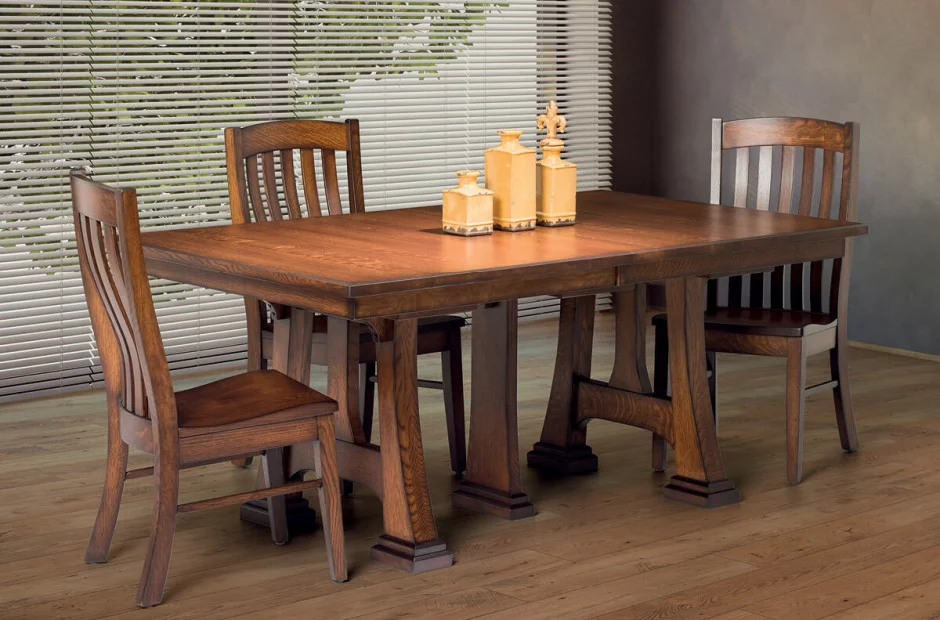
Before a single joint is cut or a drawer fitted, our Amish woodworkers assess the timber in hand: its grain, its density, and its suitability for the job. From there, it embarks on a journey similar to the one lumber has followed for hundreds of years in Amish furniture making. Here, we’ll explore the kinds of wood authentic Amish craftspeople use and the techniques which make them so respected.
The North American Hardwoods Countryside Amish Furniture Offers
In order to be truly authentic, Amish wood furniture is built from solid North American hardwoods. Countryside works with a select range of species, each chosen for distinct properties that suit it to specific pieces and uses.
-
Oak: Dense, strong, and takes stain predictably. White oak has a tighter grain and higher density, making it well suited to dining tables and heavy-use case pieces. Red oak is slightly more open-grained and works well in bedroom and living room furniture where a pronounced figure is a plus.
-
Cherry: Cherry starts warm and medium-toned, then deepens to a richer amber over years of light exposure. Its smooth texture and moderate density make it a reliable choice for bedroom sets, bookcases, and dining tables. It sands cleanly and holds the finish well. Learn more about cherry in this furniture guide.
-
Brown maple: Brown maple has a fine, even grain with minimal variation. It responds predictably to stains and paints, making it a practical choice for painted Amish furniture pieces or customers who want a consistent, uniform look. It is also dense enough to hold up under daily use.
-
Walnut: Walnut is naturally dark with a refined grain that needs little enhancement. We use it most often for dining tables, bedroom sets, and accent pieces where color and grain are central to the design.
-
Hickory: Hickory is one of the hardest domestic species available, with dramatic grain variation. It suits customers who want something visually distinctive and structurally demanding.
-
Elm: Elm has an interlocked grain that gives it notable resistance to splitting. It works well in both structural and decorative applications, making it highly suited for Amish woodworking and furniture.
-
Tiger maple: Tiger maple is a figured variation of hard maple, marked by a rippled, wavy grain pattern that reflects light differently across the surface. The figure occurs naturally and varies from board to board, so no two Amish furniture pieces look identical. It is most often used in bedroom furniture, accent pieces, and smaller case goods where the figure can be featured prominently.
What You Won’t See in Authentic Amish Woodworking
No true Amish woodworking will use MDF, particleboard, plywood cores, or veneered surfaces in its furniture. These materials are common in mass-produced furniture because they are cheap and fast to work with. They also dent, swell with moisture, and cannot be refinished.
Amish wood furniture is solid wood through and through, which means it can be sanded, repaired, and refinished if the surface ever needs attention.
Featured
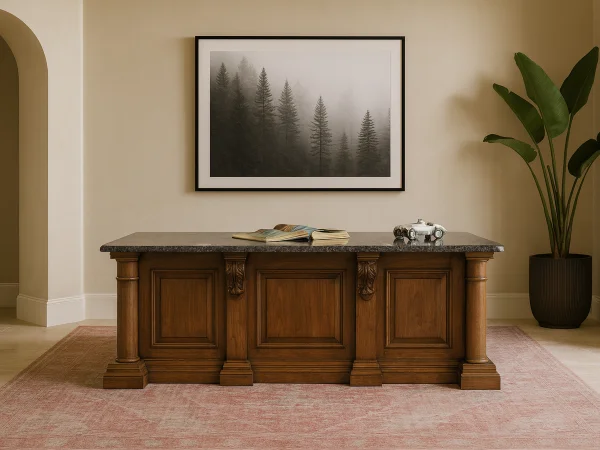
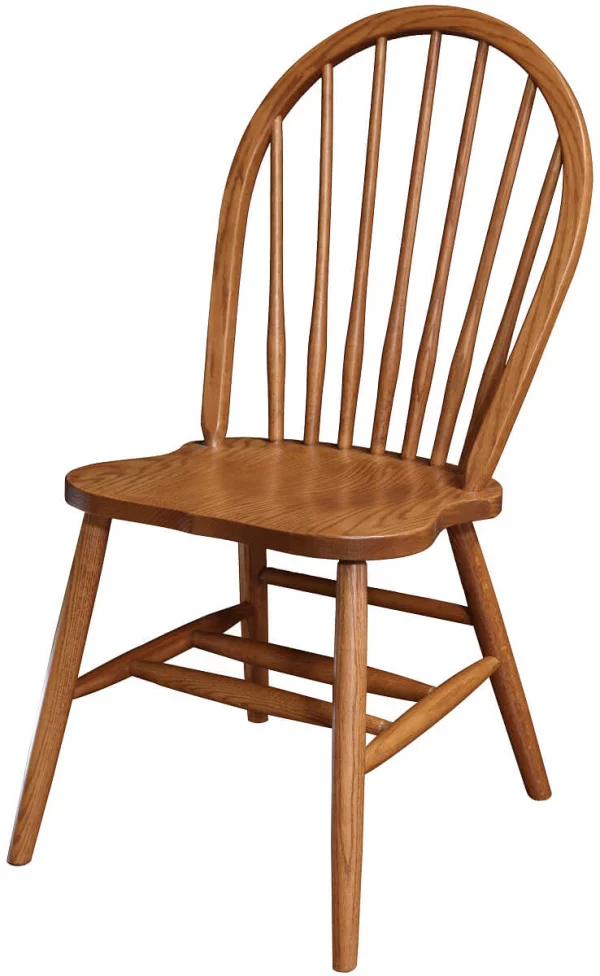
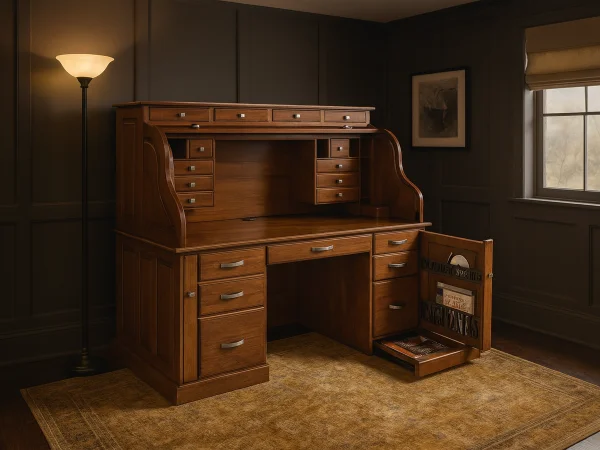
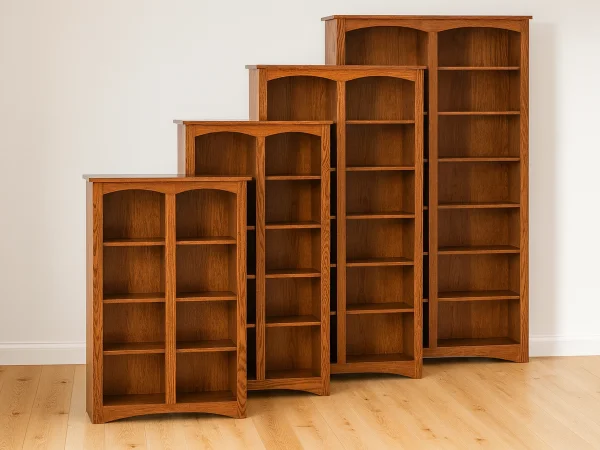
Examples of Amish woodworking


Responsible Sourcing: Where the Wood Comes From
The Amish woodworking shops we partner with source regionally, which keeps transport distances short and supports local sawmills and forest stewards. Moreover, our furniture features exclusively responsibly managed North American forests.
Responsible forest management means timber is harvested at rates that allow forests to regenerate. It also means selective harvesting rather than clear-cutting, preserving stand diversity and long-term forest health. In practice, this looks like removing small groups while leaving the surrounding canopy intact, which protects soil stability, water quality, and the younger trees that will become the next generation of harvestable timber.
Forests managed this way produce hardwood continuously rather than in single cycles of harvest and replanting.
How Skilled Amish Woodworkers Select Specific Timber
Our Amish woodworkers assess each piece of lumber before it goes into a build. They look at grain direction and prioritize straight, consistent runs that will stay stable once the piece is in a home. They evaluate the figure, deciding where a given board belongs in a panel, tabletop, or door face.
Color matching matters on large surfaces. A dining tabletop or dresser front is made up of multiple boards, and our woodworkers arrange those boards so color and grain flow across the surface without abrupt transitions.
Moisture content is evaluated before building begins. Green or improperly dried wood moves after it leaves the shop, causing joints to loosen and surfaces to warp. Comparatively, lumber acclimated to shop conditions stays stable once it is built and finished.
While not every Amish furniture provider is as selective, Countryside Amish Furniture insists that woodworkers go the extra mile to utilize only top tier timber for our customers’ furniture.

Why Amish Woodworking Is Highly Regarded
The use of solid hardwood is only a starting point. What sets Amish-built furniture apart is the technique applied to that material.
Amish woodworkers train through extended apprenticeships in working shops, not classrooms. The methods they use are the same ones used before power-assisted shortcuts became standard, and those methods produce stronger, more precise results.
-
Mortise and tenon joinery: This joint connects rails and posts by fitting a tenon, a shaped projection on one piece, into a mortise, a cut cavity in the other. Glued and sometimes pegged, it holds under racking stress in ways that screws and dowels do not. It is the standard connection in chair and table frames built for daily use.
-
Dovetail joinery: Dovetail joinery is used for drawers. The interlocking fan-shaped cuts resist the pulling force a drawer experiences every time it is opened. Drawers built this way do not loosen over time the way stapled or pocket-screw construction does.
-
Artfully combining species: Amish woodworkers combine species both structurally and visually. A walnut tabletop on a brown maple base, for example, takes advantage of each species where it performs best. Our woodworkers account for how different species move with seasonal humidity changes and build accordingly.
-
Hand-sanding: Hand-sanding is done in stages, moving through progressively finer grits to remove mill marks and prepare the surface for finish. Machine sanders leave circular patterns that show under a clear finish. Sanding along the grain eliminates those marks and produces a surface that takes stain and varnish evenly.
-
Hardware fit and drawer action: Hardware fit and drawer action are dialed in by hand before a piece ships. Soft-close slides are mounted and adjusted so they run quietly and close fully. Doors are hung and fitted so they sit flush and operate without binding.

Amish Furniture Wood Treatment and Finish
Countryside uses a catalyzed conversion varnish applied in multiple coats. Catalyzed conversion varnish is a two-component finish that cures through a chemical reaction rather than simply drying. The result is a hard, durable film that resists moisture, heat, and daily abrasion better than standard oil or lacquer finishes. It is the same class of finish used in commercial and institutional furniture.
Each coat is applied, allowed to cure, then lightly sanded before the next coat goes on. The final surface is smooth and protective without obscuring the grain and figure of the wood beneath it.
Reclaimed Barnwood: A Different Kind of Material
Reclaimed barnwood is a category of its own./p>
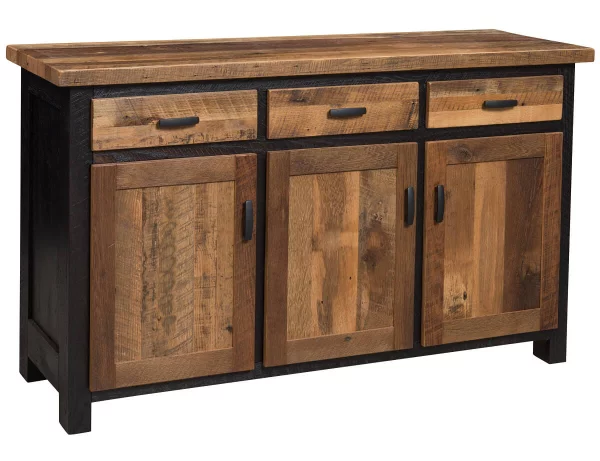
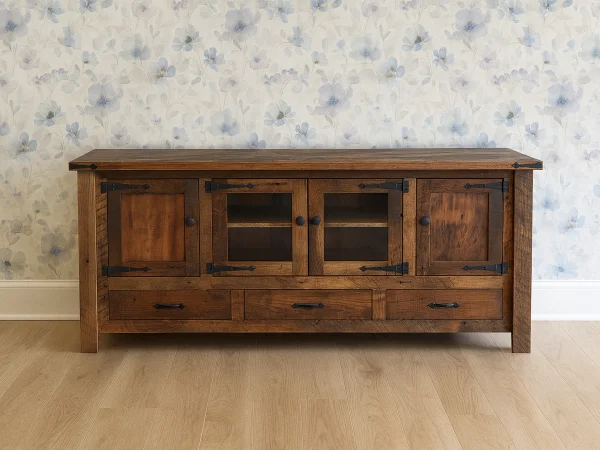
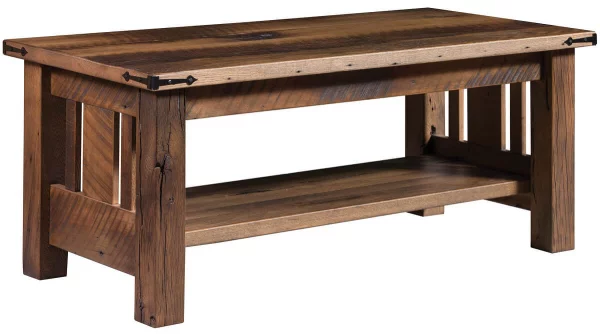
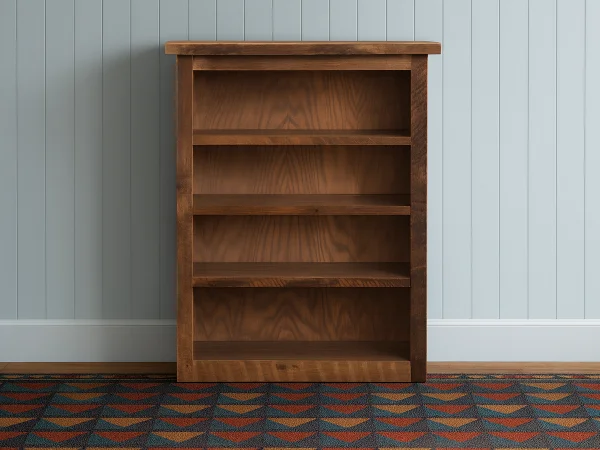
The term refers to hardwood salvaged from old barns, fences and other farm structures. Over its past decades, the wood dried and even strengthens. Hand-hewn saw marks, weathering patterns, and color variation from decades of exposure give each board a visual history that cannot be replicated in new material.
Where nail holes exist, our woodworkers fill them with clear epoxy, which stabilizes the surface without concealing the history. The result is a smooth, splinter-free surface.
Reclaimed barnwood works well in dining tables, benches, shelving, and accent furniture. If you want to see the material before committing, we can send samples.
Featured
See reclaimed wood furniture from Countryside Amish Furniture


Why Choose Countryside Amish Furniture
Every piece Countryside builds is made to order. There is no warehouse inventory, no floor stock, and no pre-built pieces waiting to ship.
The Amish woodworking process starts with your choices: wood species, stain, size, hardware, upholstery if applicable, and optional features. If you are unsure what wood or stain will look right in your home, we can mail physical samples before you commit. Once your selections are confirmed, we send your order to the shop and the build begins.
Our team in Arthur, Illinois is available throughout the process. Whether you have questions before you order, want to discuss a custom modification, or need an update on your build, we are reachable by live chat. We are not a call center; you are talking to people who know Amish woodworking firsthand.
See all that we offer by perusing categories as diverse as craftsman bookcases, French country chairs, Mid-Century dining tables, and contemporary hutches.